
Industrial analysis
Metalworking for the Polish Armed Forces: Opportunities and Challenges
Poland’s defence modernisation is creating long-term demand not only for complete weapon systems, but also for welded structures, CNC-machined components, spare parts, tooling and special processes. This creates opportunities for companies specialising in metalworking in Poland to enter domestic and European defence supply chains. The market is demanding: suppliers must demonstrate process quality, material traceability, readiness for customer audits and disciplined documentation. At the same time, metalworking outsourcing is becoming increasingly important because original equipment manufacturers and system integrators need to expand capacity, diversify sources and reduce dependence on individual plants without waiting years for new in-house production lines.
Why Poland’s military modernisation matters to metalworking companies
A contract for a tank, infantry fighting vehicle, missile launcher or air-defence system is only the visible end product of a much longer industrial process. Behind the completed platform is a network of suppliers providing plate, forgings, castings, frames, enclosures, fastening elements, tanks, chassis components, hydraulic parts, special tools and workshop equipment. Heat treatment, surface finishing, non-destructive testing, coordinate measurement and quality records form part of the same value chain.
For manufacturers, the decisive question is not only the value of headline contracts, but how much production, maintenance and life-cycle responsibility will be located in Poland. Domestic manufacturing, repair and spare-parts capabilities create repeatable demand for private companies as well as state-owned defence groups.
The strongest opportunity is not a general declaration that a company wants to “work for defence”. It is the ability to occupy a specific position in the chain: for example, as a supplier of large welded structures, precision short-run parts, qualified coatings or rapidly manufactured replacement components.
The scale of Poland’s defence modernisation
Poland’s 2026 budget allocated PLN 124.8 billion to defence expenditure in the central budget, equal to 3.0% of forecast GDP. When the Armed Forces Support Fund is included, the total planned defence effort reaches approximately PLN 200.1 billion, or 4.81% of GDP. These figures cover different financing scopes and should not be treated as contradictory. For industry, the essential point is that spending covers not only equipment purchases, but also infrastructure, stockpiles, logistics, sustainment and the expansion of production capabilities. Polish Senate
European policy adds another potential source of demand. SAFE provides up to EUR 150 billion in loans for defence investment and joint procurement. Poland has indicated financing of approximately EUR 43.7 billion and expects implementation to involve more than 10,000 companies. These are financing frameworks, not guarantees for individual suppliers. Council of the EU Polish government
High defence expenditure is already embedded in public financing, and several major programmes include production, assembly, technology-transfer or maintenance elements in Poland. This does not mean that every contract automatically creates a broad order portfolio for domestic SMEs.
Programmes that may generate demand for metal components
Borsuk: a Polish platform with a broad cooperation base
The first implementation contract covers 111 Borsuk infantry fighting vehicles, with a gross value of approximately PLN 6.57 billion and deliveries scheduled for 2025–2029. The first 15 series-production vehicles were delivered in December 2025. A domestic platform and the planned family of specialised variants can create demand for hulls, load-bearing structures, shields, frames, brackets and replacement parts. Polish MOD
K2PL and supporting vehicles
The second K2 implementation contract covers 180 tanks for 2026–2030, including 64 K2PL vehicles, with 61 planned for production at Bumar-Łabędy. It also includes recovery, engineering and bridge vehicles. Subcontracting opportunities may arise in parts, tooling, test equipment, maintenance systems and supporting structures. Polish MOD
Narew: launchers, missiles and industrial capacity
The MBDA–Polish Armaments Group agreement enables manufacture in Poland of more than 1,000 CAMM-ER missiles and over 100 launchers, with related contracts worth more than GBP 4 billion. A further PLN 3 billion supports industrial capacity, while a 2026 agreement covers missile motors and fragmentation warheads at MESKO. MBDA Ministry of State Assets
Homar-K, 155 mm ammunition and Apache support
CGR-080 missiles for Homar-K are planned to be produced in Poland by the Hanwha WB Advanced System and Hanwha Aerospace joint venture, with deliveries scheduled from 2030. This is a future capability under development, not an already operating series-production line. Polish MOD
More than PLN 2.4 billion has been allocated to 155 mm ammunition infrastructure at DEZAMET, MESKO, Nitro-Chem and Gamrat. A new shell-body plant in Kraśnik is being developed with planned capacity of up to 150,000 units per year. The eventual scale of orders available to private companies will depend on procurement models and supplier qualification. Ministry of State Assets
Offset agreements signed in March 2026 opened the development of a specialist support base for 96 AH-64E Apache helicopters at Military Aviation Works No. 1. For general metalworking companies, accessible opportunities are more likely to involve fixtures, ground-support equipment, workshop systems and selected maintenance parts than flight-critical helicopter components. Polish MOD
Homar-K, parts of the Narew industrial capability and new ammunition capacity are being developed in stages. Before investing, a supplier should distinguish between a signed programme agreement, the launch of an operational production line and the appearance of a qualified request for quotation.
How defence modernisation creates demand for metalworking
Industrial value is generated at several levels. The first is series production of components for new platforms. The second includes tooling, jigs, assembly lines, inspection stations and workshop equipment needed to start production. The third is the later supply of spare parts, repairs, upgrades and component regeneration. This through-life segment is often less visible, but it can provide more stable orders over many years.
A single programme may require cut and bent plate, welded bodies, turned and milled parts, covers, brackets, tanks, transport frames, technical containers and sensor mounts. The more production and support located in Poland, the broader the domestic supply chain becomes.
Metal fabrication and machining technologies with the strongest potential
Cutting, bending, rolling and welding
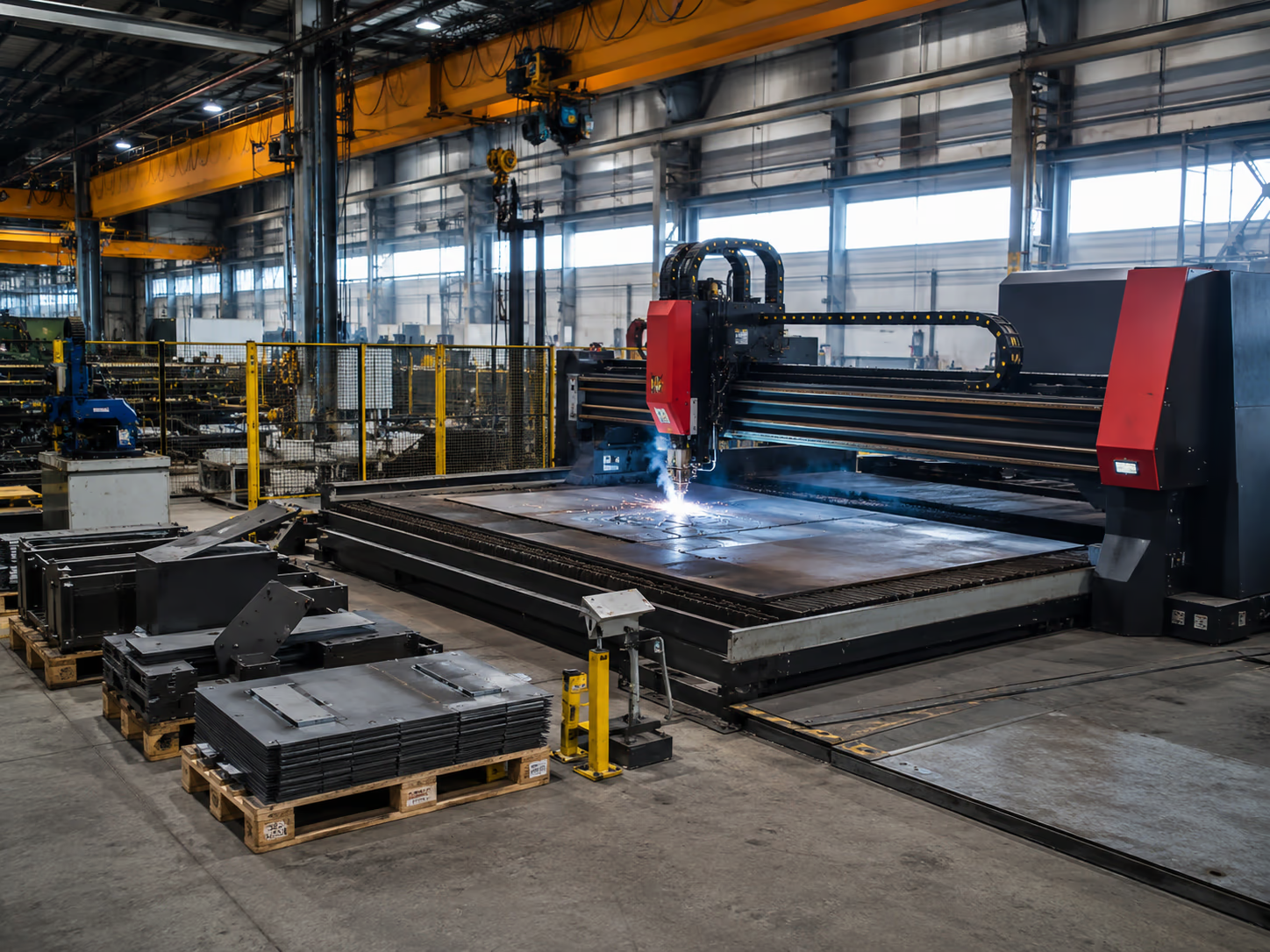
Vehicles, launchers and mobile workshops require laser, plasma, oxy-fuel or waterjet cutting followed by bending, rolling and welding of structural steel, armour-grade materials, stainless steel or aluminium. Competitive advantage comes from qualified procedures, distortion control and complete records for every welded assembly.
Turning, milling and multi-axis machining
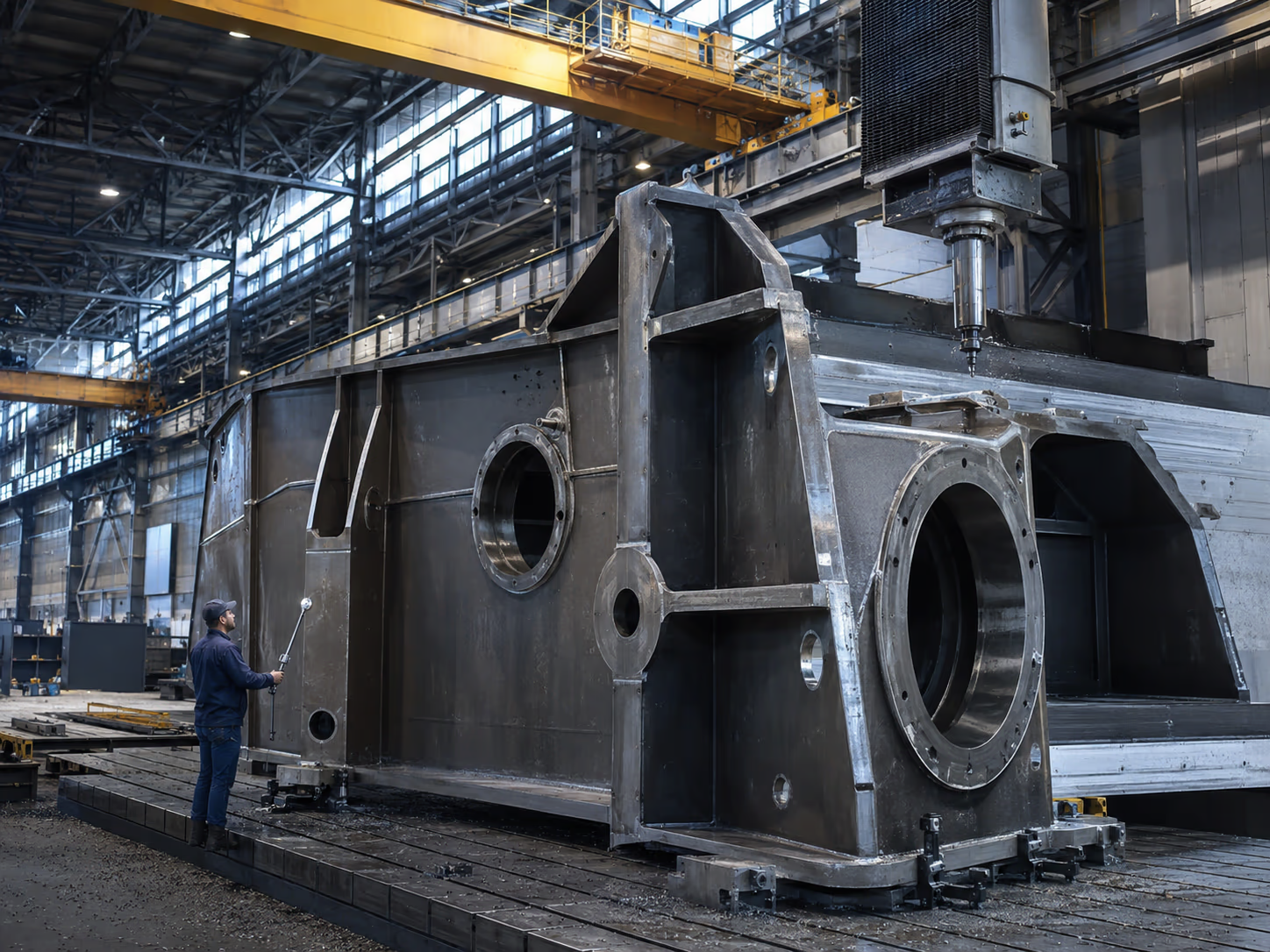
CNC machining for the defence industry includes enclosures, adapters, sockets, baseplates and parts for mechanical, hydraulic and pneumatic systems. Valuable capabilities include short runs, five-axis machining, large work envelopes, first-article inspection and rapid response to drawing revisions.
Heat treatment and surface engineering
Hardening, stress relieving, anodising, phosphating, galvanising, wet and powder painting, and specialist coatings affect the service life of equipment exposed to humidity, dust, salt and extreme temperatures. These processes can form attractive niches but require stable parameters and traceable inspection results.
Castings, forgings and special materials
Castings and forgings can serve as semi-finished products for load-bearing elements, housings and running-gear components. Key barriers include approved material sources, internal-defect inspection and repeatable properties in special steels and aluminium alloys.
Metrology, NDT and production documentation
CMM inspection, 3D scanning and NDT become part of the delivered product. Results must link to the material batch, operator, equipment and drawing revision. Huta Stalowa Wola’s supplier resources illustrate the importance of audits and non-conformance control. HSW
Spare parts, regeneration and repairs
A growing equipment fleet will increase demand for short batches and rapid replacement-part production. Controlled documentation, configuration management, dimensional verification and repair validation will be essential. For many SMEs, this segment may be more accessible than series production of a highly critical component for a newly introduced weapon system.
Opportunities for SMEs and specialised subcontractors
A small or medium-sized manufacturer will rarely enter a programme as the integrator of a complete platform. It may nevertheless secure a profitable position as a process specialist or component supplier. Realistic areas include frames, racks, enclosures, brackets, containers, tanks, handles, panels, installation elements, tooling, test-equipment structures, replacement parts, heat treatment, coatings, NDT and dimensional inspection.
A valuable niche is one that an integrator cannot easily replace: large workpieces, difficult materials, rapid prototyping, repeatable low-volume production or several operations under one quality system. Documented process knowledge allows a supplier to progress gradually towards parts carrying greater responsibility.
European programmes create routes into international consortia and dual-use development, but not immediate sales. They require partnerships, R&D work, formal compliance and financing before commercial orders appear.
The most realistic route is to begin with a component or process of moderate criticality, establish a positive quality history and only then accept greater responsibility. Starting immediately with flight-critical parts, weapon-system integration or sensitive missile modules generally requires a substantially longer and more expensive qualification path.
Metalworking outsourcing and resilient defence supply chains
High procurement volumes do not mean that final manufacturers will perform every operation internally. Expanding halls, purchasing machinery and recruiting qualified staff can take much longer than approving a competent subcontractor. Metal fabrication outsourcing can therefore provide both additional capacity and a qualified alternative source for a critical process.
Poland is attractive to international OEMs because of its industrial base and experience in automotive, rail, energy and machinery. The supplier market is fragmented, however, so buyers must verify tolerances, materials experience, certifications, subcontractor control, capacity and data-security readiness.
A structured shortlisting process for Polish metalworking suppliers can accelerate the initial search by filtering companies according to processes, location and business profile. It does not replace technical due diligence or an audit, but it narrows the candidate list.
A well-designed outsourcing strategy should include at least two levels of resilience: a primary source and either an alternative qualified supplier or a documented recovery plan. In defence production, resilience becomes part of the commercial value proposition, especially when a component depends on long-lead material, restricted capacity or a rare special process.
Barriers to entering the defence industry
Quality must be demonstrated, not declared
Defence customers may require material traceability, metrology control, first-article inspection, non-conformance reporting and formal change management. Audit rights may extend to subcontractors, and a technically acceptable part can still fail acceptance if its history cannot be reconstructed.
Investment may precede real orders
Machinery, robotic welding and inspection capability require capital and qualified people. Investing against an announcement without a contract, qualification plan or reliable volume creates risk; equipment useful to civil customers reduces exposure.
Skills shortages restrict scaling
Poland faces shortages of welders, CNC operators, CAM programmers, manufacturing engineers and metrologists. Automation helps, but it does not replace process engineering, qualified personnel or competent supervision of special processes.
Information security and export control
Advanced work may require segregated IT environments, controlled access, personnel clearances or an industrial security certificate. Strategic and dual-use items can create additional classification, licensing and technology-transfer obligations.
Dependence on a single programme
Delivery schedules can move and technical documentation can change. Excessive dependence on one integrator or one platform increases the risk of unused capacity and price pressure. For most manufacturers, defence should diversify rather than completely replace the civil portfolio.
If platform ownership, technical data and critical components remain abroad, Polish companies may receive only a limited workshare. Long-term industrial value depends on production rights, maintenance responsibility, modification capability and access to the equipment’s life-cycle supply chain.
Standards, certification and defence quality requirements
There is no universal certification package for all defence suppliers. Requirements depend on the product, process criticality, the company’s tier in the supply chain and the contract. A management-system certificate supports qualification but does not replace an audit of the specific process or production site.
ISO 9001 and AQAP
ISO 9001 is a frequent starting point. At the date of publication, ISO 9001:2015 remains the certification baseline while ISO is preparing a new edition. AQAP requirements may be specified in a tender or contract but do not apply automatically to every military order. The decisive factors are product risk, government quality-assurance arrangements and the supplier’s role. PCBC
Welding, special processes and inspection
Welded structures may require ISO 3834, qualified welding procedures, WPS documentation, approved personnel and suitable welding coordination. The drawing or contract defines the necessary NDT scope. EN 1090 applies to relevant construction products, not automatically to every military component. ISO 14001, ISO 45001 and ISO/IEC 27001 may be requested depending on environmental, safety and information-security risks.
Classified information and dual-use controls
Access to information classified as “Confidential” or above generally requires appropriate industrial security arrangements. The Polish “Restricted” level operates under a lighter regime, but statutory duties, training and access-control procedures still apply. ABW
Dual-use control can cover a physical product, technology, software, documentation or technical assistance. Each case requires classification; the core EU framework is Regulation (EU) 2021/821. EUR-Lex

A practical roadmap for entering the defence supply chain
-
Assess readiness and select a defensible niche
Audit actual workpiece sizes, tolerances, materials, capacity, personnel and inspection resources. Confirm traceability from material certificate to final inspection. The result should identify genuine strengths and components the company should not yet offer.
-
Close quality, security and organisational gaps
Organise quality, metrology, record retention, document control and change management. Plan additional certificates, welding qualifications, NDT, information security and export controls against customer requirements. Capital investment should preferably support both defence and civil production.
-
Enter the relevant procurement channels
Monitor public procedures, integrator supplier portals, tier-1 RFQs and targeted B2B events. Prepare an English and Polish technical profile covering processes, materials, dimensions, tolerances, certifications, metrology and capacity. Starting points include Poland’s e-Procurement platform and supplier qualification areas maintained by major manufacturers.
-
Treat the first order as a capability demonstrator
Manage the first batch with strict contract review, inspection planning, first-article approval, non-conformance records, change control and complete release documentation. Start with moderately critical parts such as enclosures, brackets, fixtures or supporting structures. Reliability and transparent communication often matter more than the lowest price.
The five-to-ten-year outlook for metalworking in Poland
Defence modernisation can permanently influence the structure of Poland’s metalworking sector because the equipment being introduced will require support for decades. The most stable effect will emerge where Polish plants gain access to technical documentation, repair and modification rights, material know-how and the ability to produce replacement parts. One-off assembly creates less industrial value than responsibility for the complete life cycle.
Automation will be another defining trend. Robotic welding, automated machine loading, digital quality reporting and integrated production data can offset labour constraints. Companies that demonstrate process capability quickly will be better placed for short batches and recurring spare-parts orders.
European instruments such as SAFE, the European Defence Fund and the European Defence Industry Programme reinforce the policy objective of resilient European capacity. Polish manufacturers may therefore find opportunities not only in supplies to the Polish Armed Forces, but also in multinational programmes covering dual-use technology, ammunition, military mobility, land-system components and through-life support.
Long-term benefits will arise only if high defence spending is converted into local production, service responsibility, technological rights and supplier development. Otherwise, equipment imports may rise without a corresponding expansion of Polish industrial competence.
Opportunities, requirements and risks
Opportunities, requirements and risks for metalworking companies
| Area | Potential orders | Key requirements | Main risks |
|---|---|---|---|
| Land vehicles and protected structures | Hulls, frames, shields, running-gear parts, welding and large-component machining. | Traceability, NDT, stable welding and CNC processes, first-article inspection. | High capital expenditure, difficult materials and schedule pressure. |
| Air defence and launcher systems | Chassis structures, frames, cabins, enclosures, workshops and service equipment. | Information security, precision and qualified special processes. | Long qualification cycles and restricted technical information. |
| Ammunition and missile components | Bodies, semi-finished parts, production tooling, heat treatment and coatings. | Tight process control, metrology, safety and export-control compliance. | High quality liability and a restricted pool of approved suppliers. |
| Maintenance and spare parts | Short batches, regeneration, repair tools and workshop equipment. | Rapid lead times, configuration control, measurement and repair records. | Price pressure, irregular demand and incomplete legacy data. |
| European programmes and dual-use technology | Prototypes, mobility systems, automation, special materials and R&D. | International partnerships, formal compliance and IP protection. | Long commercialisation periods and uncertainty over series production. |
Conclusion: defence metalworking requires a long-term strategy
Poland’s military modernisation is creating genuine demand for welded structures, CNC-machined parts, special processes, spare parts and maintenance services. The strongest opportunities arise where production or support responsibilities are located in Poland. This can benefit both large industrial groups and specialised SMEs able to offer a clearly defined process advantage.
At the same time, metal fabrication in Poland for defence customers is not simply an extension of ordinary industrial sales. Suppliers must accept longer qualification cycles, heavier documentation, audit rights, security requirements and responsibility for continuity of supply. Companies combining qualified processes, automation, responsive engineering and customer diversification will be in the strongest position.
The strategic objective should not be one isolated order. It should be a durable role across several programmes and the ability to support equipment throughout its life cycle. Under this model, Polish manufacturers can become important elements of both national and European defence supply chains.
Frequently asked questions
Can a small company enter the defence sector without its own finished product?
Yes. The most realistic role is that of a process or component subcontractor supplying welded structures, CNC parts, enclosures, coatings, NDT, metrology, tooling or spare parts. Entry usually begins with components of moderate criticality and the development of a reliable quality record.
Are ISO 9001 and AQAP mandatory for every defence supplier?
No. ISO 9001 is a common starting point, but requirements come from the specific contract. AQAP may be requested for armed-forces supplies or government quality assurance, but it does not apply automatically. Product type, risk and the supplier’s position in the chain determine the required standard.
Which metalworking technologies have the strongest potential?
The strongest growth potential lies in cutting and welding, thick-plate fabrication, large-scale and multi-axis CNC machining, heat treatment, surface engineering, NDT, metrology and spare-parts production. Actual demand will depend on how much manufacturing and through-life support is located in Poland.
How can a manufacturer find its first defence customers and integrators?
Useful channels include Poland’s e-Procurement platform, supplier portals operated by manufacturers, tier-1 RFQs, trade fairs and targeted B2B meetings. A technical supplier profile should clearly state processes, materials, tolerances, maximum dimensions, certifications, metrology and available capacity.
How should buyers use metalworking outsourcing and supplier shortlisting?
Outsourcing can add capacity, provide access to a special process or establish an alternative source. Shortlisting should narrow the market by technology, material, location and certification, followed by technical discussions, sample assessment, auditing and project-specific qualification.